Technical Articles
Electrical faults are not always dramatic. A cable may slowly deteriorate. Moisture may enter an appliance. Insulation may weaken over time. A residual current device is designed to detect dangerous leakage currents and disconnect the supply before they become a serious hazard. Understanding how RCDs work helps create safer and more dependable electrical installations.
Ask an electrician which protective device has probably prevented the most electrical accidents, and the answer often includes the RCD.
That might seem surprising because it is usually one of the quietest devices inside a distribution board. It does not display measurements or control equipment. Most of the time, it simply waits.
Then an insulation fault develops. Perhaps a garden tool damages a cable. Maybe water reaches an appliance that should have stayed dry. The current leaking to earth may be too small for a conventional breaker to notice, but it can still become dangerous. That is exactly where an RCD proves its value.
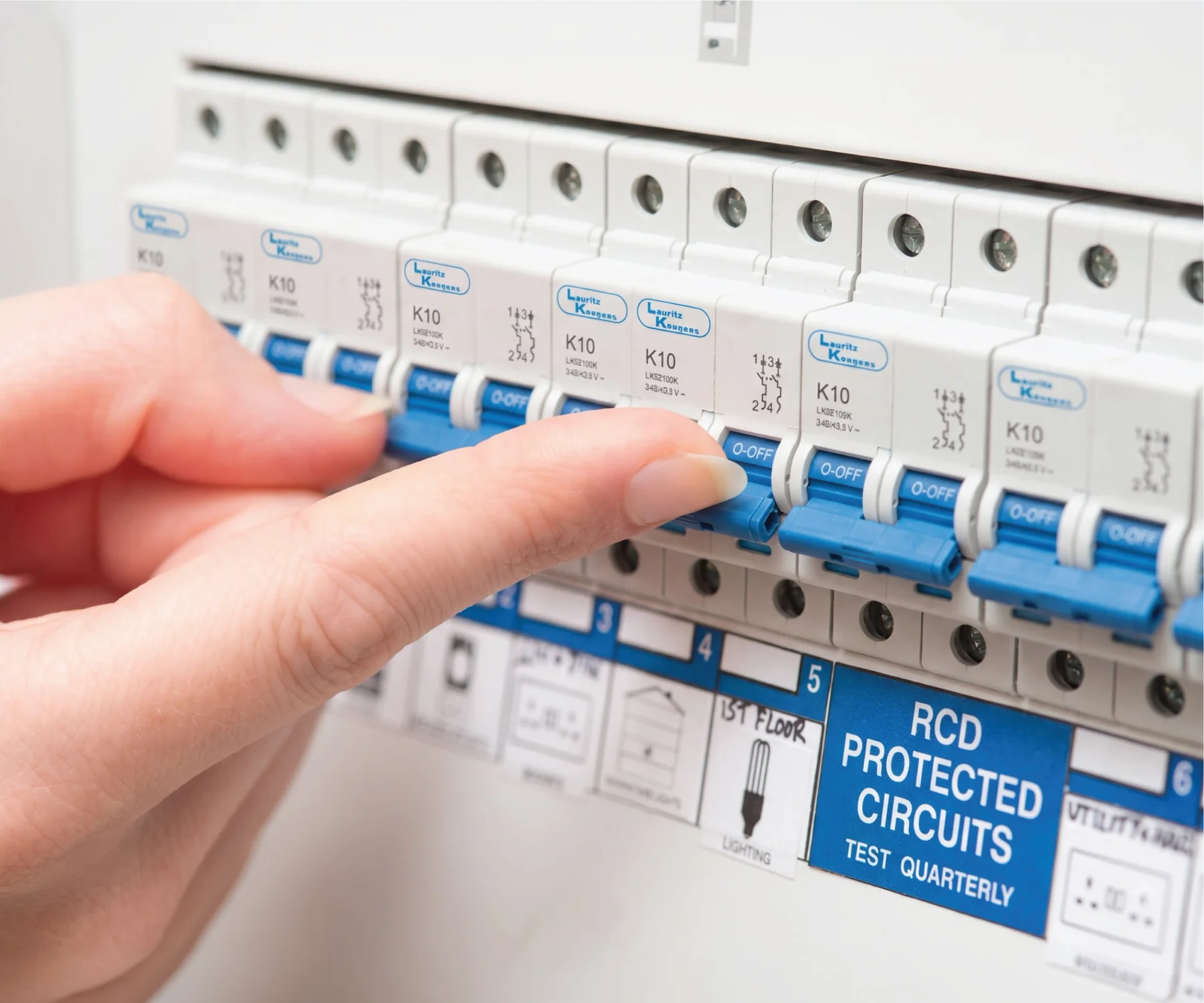
Many people first notice one while looking inside a consumer unit and immediately wonder, what is RCD in electrical?
A residual current device monitors the balance of current flowing through all active conductors of a circuit. Under normal operating conditions, the algebraic sum of these currents is zero. If some current escapes to earth because of damaged insulation or accidental contact, the balance changes. The device reacts by disconnecting the affected circuit quickly. That rapid response provides effective RCD protection, helping reduce the risk and severity of electric shock caused by earth leakage faults.
Not every electrical installation behaves in the same way. Modern homes, commercial buildings, and industrial facilities all contain different kinds of electrical loads, which is why several RCD categories are available to suit different operating conditions.
Walk through an older residential installation, and Type AC devices are still fairly common. They are intended for circuits where the leakage current is purely alternating. Simple lighting circuits and conventional resistive loads are typical examples.
Among the recognised types of residual current device, Type AC devices are still used in some installations. However, many modern applications favour Type A RCDs because the increasing use of electronic equipment can produce pulsating DC residual currents that Type A devices are designed to detect.
Homes have changed a great deal over the last decade. Washing machines, induction cooktops, inverter air conditioners, and electronic power supplies all contain electronic circuits that behave differently from traditional appliances. These loads may produce pulsating DC residual currents.
For that reason, Type A has become one of the most widely specified types of residual current device in modern electrical installations where electronic equipment is increasingly common.
Some electrical systems place much greater demands on protective devices. Electric vehicle charging equipment, photovoltaic installations, frequency converters, and certain industrial drives can generate leakage characteristics beyond the capability of standard RCDs.
These applications often require specialised solutions. The more advanced types of residual current device are selected after considering the connected equipment, installation standards, and the expected characteristics of the residual current within the circuit.
RCDs are available with different rated residual operating currents, including 30 mA, 100 mA, and 300 mA. A 30 mA device is commonly used to provide additional protection against electric shock, while higher ratings are often selected for equipment protection or reducing the risk of fire, depending on the application and applicable installation standards.
At first glance, a Portable RCD seems almost too simple to make much difference. It has a switch, a test button, and very little to attract attention. Inside, however, it is constantly comparing electrical current and making decisions in fractions of a second whenever something unusual happens.
Every healthy circuit follows a simple rule.
Under normal operating conditions, the current flowing through all active conductors remains balanced. If some current flows to earth because of damaged insulation or accidental contact, an imbalance appears. That basic comparison explains how does an RCD work. The device continuously monitors this balance and reacts whenever leakage exceeds its rated sensitivity.
Speed is what makes an RCD effective.
Once the residual current reaches the operating threshold, the internal tripping mechanism disconnects the electrical supply within the disconnection times specified by applicable standards. The objective is not to protect appliances from overload. Instead, it is to reduce the duration of dangerous earth leakage currents. A properly selected RCD breaker works alongside other protective devices, creating another important layer of electrical safety within the installation.
Most people notice the small "Test" button but are unsure why it exists.
Pressing it creates a controlled imbalance inside the device, allowing the tripping mechanism to be checked without creating a real electrical fault. Manufacturers recommend testing periodically to confirm correct operation. Routine testing is also a practical way to understand how does an RCD work while helping ensure the device remains ready to respond when needed.
An RCD is no longer limited to one type of installation. It is now used across residential, commercial, and industrial environments wherever additional protection against earth leakage is required. The exact application depends on the electrical system, connected equipment, and relevant installation standards.
Socket outlets, bathrooms, outdoor circuits, kitchens, and garden equipment all benefit from additional protection against earth leakage. These locations often present a higher risk. This is because moisture can increase the likelihood of earth leakage and electric shock hazards.
This widespread use of the residual current device reflects its importance in improving everyday electrical safety inside residential installations.
Commercial facilities usually contain a wide mix of electrical loads.
Office equipment, lighting systems, air-conditioning units, and distribution boards all require dependable protection. An appropriately selected RCD breaker helps isolate leakage faults before they affect occupants or interrupt building operations. In many commercial projects, designers also use the RCD symbol shown on electrical drawings to identify circuits protected by residual current devices.
Industrial environments present different electrical challenges.
Variable-speed drives, manufacturing equipment, water treatment facilities, and infrastructure projects often require carefully selected leakage protection based on the characteristics of connected equipment. Choosing the correct level and type of RCD protection becomes particularly important where electrical reliability and personnel safety must both be maintained. Certain industrial drives, EV charging systems, renewable energy installations, and other equipment that can produce smooth DC residual currents may require Type B or other specialised RCDs.
Engineers also rely on the RCD symbol when reviewing schematics and panel layouts during installation and maintenance work.
Also Read: A Complete Guide to Residual Current Circuit Breaker (RCCB)
Electrical safety does not only depend on good wiring and quality equipment. It also depends on recognising faults before they become dangerous.
A residual current device provides that extra level of protection. It detects leakage current that ordinary overload devices may not identify. Understanding what is RCD in electrical, selecting the correct RCD breaker, and applying suitable RCD protection all contribute to safer electrical installations in homes, commercial buildings, and industrial facilities.
Lauritz Knudsen Electrical & Automation offers solutions designed to support safe, reliable, and efficient electrical infrastructure. Explore dependable electrical protection products, intelligent distribution solutions, and modern electrical technologies designed to support safe, reliable, and efficient electrical infrastructure.
No. An RCD detects earth leakage currents. On the other hand, an MCB protects against overloads and short circuits. Both devices perform different protective functions.
Moisture can reduce insulation resistance or create leakage paths to earth. This causes the device to detect an imbalance and disconnect the circuit.
The test button simulates a small leakage current. This allows users to verify that the tripping mechanism is functioning correctly.
An RCCB provides earth leakage protection only. In contrast, an RCBO combines earth leakage, overload, and short-circuit protection in a single device.
Yes. Many existing installations can be upgraded with RCD protection, although the suitability of the earthing arrangement, wiring condition, and applicable installation standards should be assessed by a qualified professional before any modification is made.

 Contact Us